MahJonggdotClub
A Mat For Us Kwanzaa Quilt Mahjong Mat
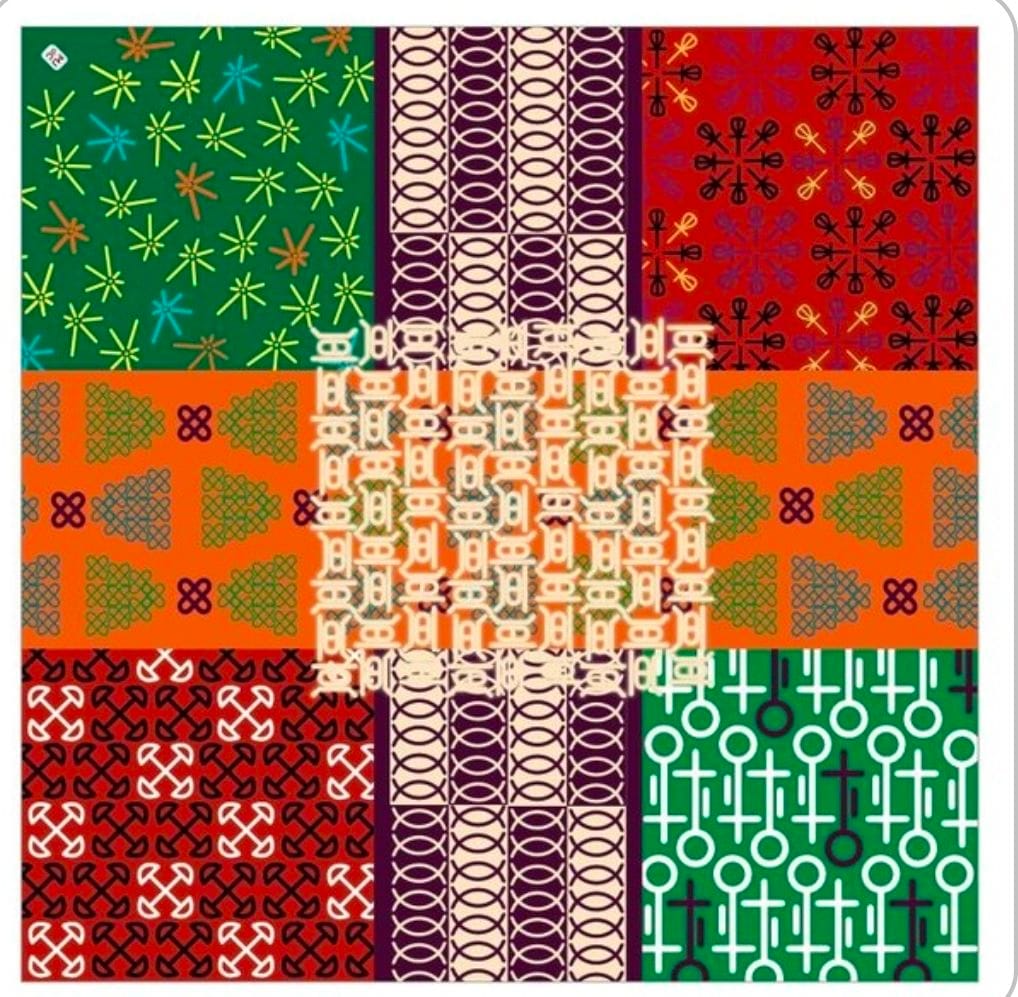
African and African American history comes together figuratively, like fabric, and literally in fabric—in the rich quilting history of the United States and the traditional fabrics known as Kente, from Ghana, and Mud Cloth, from Mali. They all include step-and-repeat patterns and the incorporation of elements and symbols that tell a story or represent something of significance.
A Mat for Us was designed as a Mah Jongg mat by Roanne Bacchus. Reminiscent of a quilt, it uses symbols for the principles of Kwanzaa to create patterns that point back to African and African-American culture and tradition.
In A Mat for Us, the symbols for unity (Umoja) and purpose (Nia) are used to create two patterns that resemble table runners. The Umoja pattern draws inspiration from Kente cloth, while the Nia pattern is more reflective of Mud Cloth. Food and gathering around a meal or table run deep in many traditions, and thus the reflection of a table runner gives a nod to the importance of community.
Another illustration is the use of the symbol for self-determination, Kujichagulia, to create an mkeka—a woven mat that serves as the foundation for all the other symbols used in a Kwanzaa celebration. While it is the topmost imagery on this mat, it functions as a foundation in a very practical way, providing players with an uncluttered, easy-to-see area for discarded tiles during a game of Mah Jongg.
This mat is designed for year-round use and is a meaningful addition to Black History Month observances and Kwanzaa celebrations alike. Available for purchase here: https://www.etsy.com/listing/4451034305/black-history-kwanzaa-mah-jongg-mat
Read more about the symbols and principles of Kwanzaa here https://iaamuseum.org/news/what-is-kwanzaa/
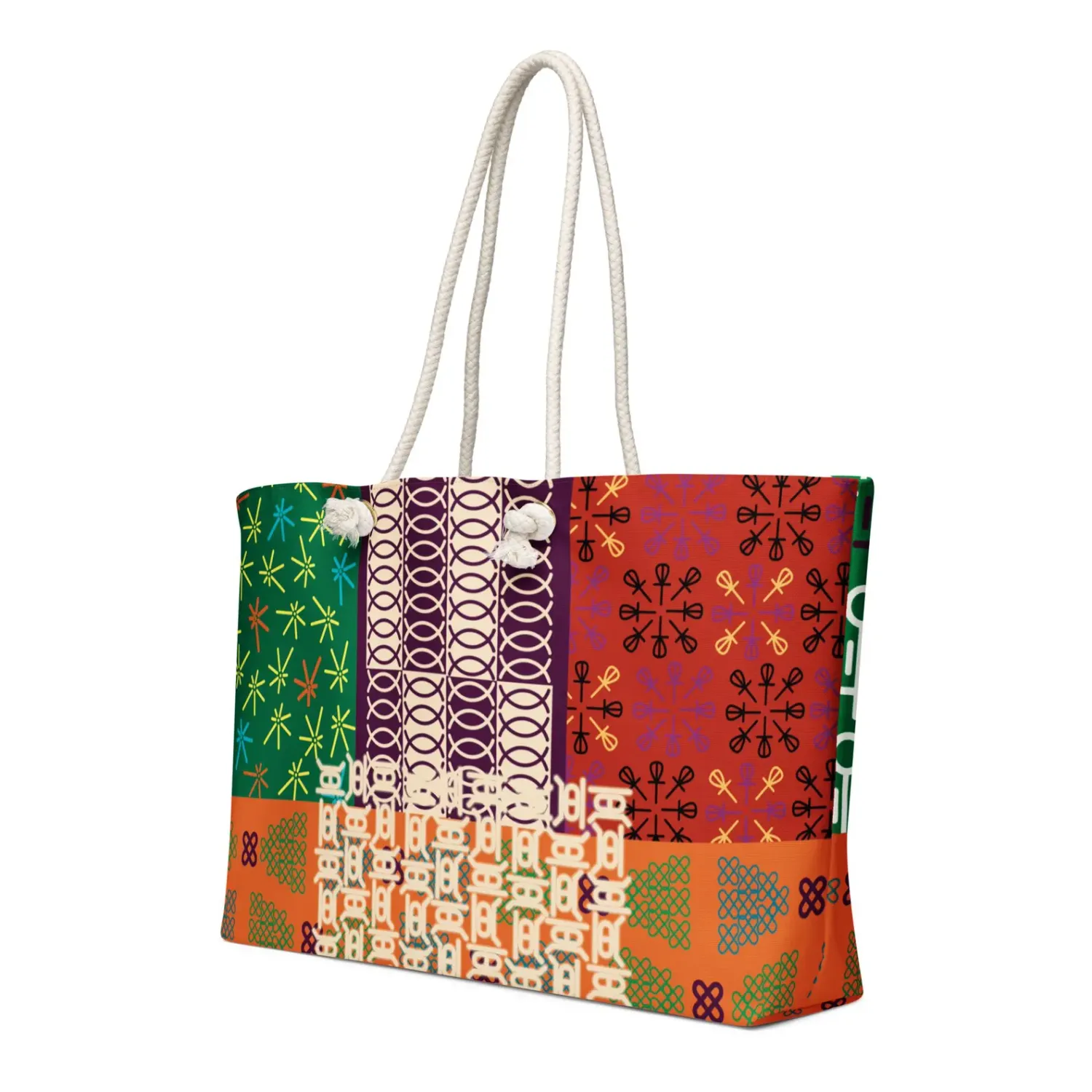
There is also a matching weekender tote: https://www.etsy.com/listing/4602080284/kwanzaa-quilt-oversized-weekender-bag-a
© 2026 MahJonggdotClub
All rights reserved